Why Peacebuilding Must Include Mental Health and Psychosocial Support
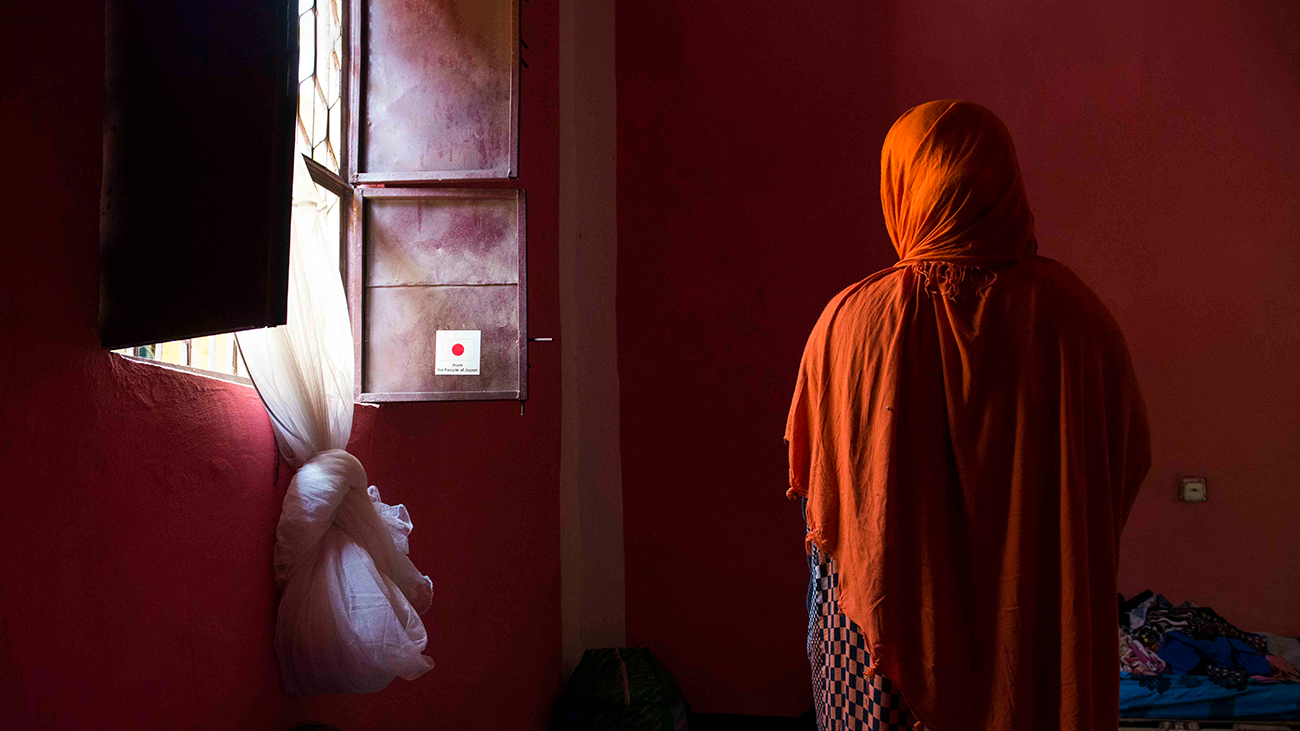
Working with partner SEDHURO, a Somali NGO, UNICEF has been supporting communities in Kismayo, Somalia, to prevent gender-based violence and provide assistance to those affected by it, including psychosocial and legal assistance. November 22, 2016. UNICEF.
Armed conflict has been on the rise over the past decade. There has been an increase not only in the number of conflicts—more than 120 globally this year—but also the number of individuals affected by conflict-related violence. In contexts like Gaza, Ukraine, the Democratic Republic of the Congo, Sudan, Myanmar, Ethiopia, and elsewhere, civilians and civilian infrastructure are being directly targeted at increasing rates. While it’s difficult to obtain precise data on civilian fatalities, the UN human rights office reported a massive 40 percent surge in civilian deaths in conflict last year, with nearly 50,000 individuals killed. The increase is even higher for women and children, who, in 2023 and 2024 were killed at four times the rate as the two years prior. Forced displacements are also on the rise. According to the most recent report of the secretary-general on the protection of civilians, 2024 saw over 122 million people forcibly displaced, a 5% increase over 2023. While on the move, those displaced people face heightened insecurity and often lack adequate access to shelter, food, healthcare, and critical supplies.
Previous studies have illustrated the stark effects that violence from armed conflict can have on the emotional health and well-being of individuals—whether as direct victims or as witnesses of violence—including post-traumatic stress disorder (PTSD). For example, in one 2004 survey in Rwanda, nearly 25% of the more than 2,000 individuals surveyed met the symptom criteria for PTSD. In a similar survey conducted in Cambodia in 2006 and 2007, over 11% of respondents had probable PTSD, while 41% percent of respondents in a survey in South Sudan in 2014 and 2015 reported symptoms consistent with PTSD.
In addition to the direct health effects that PTSD and other mental health issues can have on individuals, trauma stemming from violence can also impact the viability of peacebuilding processes. For example, in the Rwanda study cited above, the researchers found that respondents reporting PTSD symptoms were less likely to view justice processes positively, believe in community, and support interdependence with other ethnic groups. The South Sudan study showed similar results, as those reporting PTSD symptoms were less likely to say that members of other ethnic groups could be trusted. In addition, the study found that these individuals were more prone to seek revenge and more likely to have negative views of nonviolent forms of conflict resolution.
Children and youth who experience trauma while their brains are still developing may experience even stronger effects. As noted by psychologist Jemima Chase, when children learn that their environment is unsafe, they may be more quickly inclined to aggression and have a lower threshold for stress-response activation. They may also be less disposed to traits like compassion that are evolutionarily “less useful” for survival in dangerous environments. These effects become intergenerational, as those suffering trauma in their youth can grow up to become less able to care for their own children and communities. Trauma can also drive cycles of intimate partner violence, which is often prevalent in conflict-affected societies. Intergenerational effects are also compounded by the creation of collective narratives handed down over generations that can shape community perceptions of other groups.
It’s important to note that not all individuals affected by trauma or violence are prone to aggressive or violent behavior. However, data from multiple countries and regions has illustrated the effects trauma and other mental health issues can have on the success of peacebuilding processes and broader societal outcomes. Therefore, it is critical to take these effects into account when planning and implementing peacebuilding initiatives.
What Are Peacebuilders Doing about This?
The issue of mental health and psychosocial support (MHPSS) has been raised in the last two reviews of the UN peacebuilding architecture (2020 and 2024), emphasized in particular by the Netherlands, and cited in the corresponding reports of the secretary-general (2020 and 2024). However, attention to the topic within the UN peacebuilding architecture remains marginal compared with topics like financing, development, and other peacebuilding imperatives.
In 2023, the UN General Assembly adopted a resolution on mental health and psychosocial support, which encouraged member states and other stakeholders to include MHPSS needs in emergency preparedness and response plans, including services that address psychological trauma caused by armed conflicts. It also recognized the consequences of failing to address these issues in children and youth given their long-term impact and potential to limit their future opportunities.
Yet most international peacebuilding initiatives are still not designed or implemented in a way that accounts for the effects of trauma. A 2024 mapping of the integration of MHPSS and peacebuilding by the Inter-Agency Standing Committee (IASC) found that the two fields of work have developed along separate lines, particularly at the level of international policy and planning.
Grassroots Efforts to Address Mental Health and Psychosocial Support
Despite this disconnect at the international level, many grassroots actors, including women, youth, and indigenous groups, are seeking to address the psychosocial effects of conflict across multiple settings and cultures. Their efforts include truth-telling exercises, reparations, peer support, social integration, and action against gender-based violence. In some cases, these efforts also weave in livelihood support, education, and broader healthcare, addressing the well-being of individuals in a holistic manner.[1] This work of grassroots actors in addressing MHPSS is critical, given the need for services to be grounded in local knowledge and ways of understanding health and wellness.
For example, in Sri Lanka, the government-appointed Consultation Task Force on Reconciliation Mechanisms worked with local communities to devise how MHPSS could be integrated into transitional justice mechanisms. This is critical as part of a “do-no-harm” approach to processes in which individuals may be asked to relive traumatic experiences. Civil society organizations in Nepal have undertaken a “survivor-to-survivor” approach, in which affected women work together using arts-based therapeutic tools like storytelling. Persons with disabilities were also included, including through a “Living Memories” photo exhibition, which aimed to challenge the stigma of having a disability. In Iraq, a program integrating MHPSS and livelihood support combines training on technical skills with training on soft skills, like the ability to respond effectively to stress using positive coping mechanisms. It also supports community cohesion by bringing together internally displaced persons and host communities.
While grassroots actors work to integrate MHPSS and peacebuilding across numerous contexts, their visibility at the international level is often low, partly because they may not explicitly identify their work as contributing to MHPSS. Increasing the visibility of these actors is important (while taking into account potential the risks of doing so), not only to learn from their contributions but also to mobilize international support for their efforts, whether through funding or other types of partnerships and support.
What Role for the International Community?
Following the General Assembly’s recognition of the importance of MHPSS, there is more that UN member states and the broader international system can do to integrate MHPSS into peacebuilding initiatives. As noted by the IASC MHPSS Reference Group, integrating peacebuilding and MHPSS happens along a spectrum, from “light-touch” approaches to full integration. At a minimum, all peacebuilding initiatives should undertake a “do-no-harm” approach, accounting for the potential risks of peacebuilding initiatives for the mental health of participants. This might entail, for example, assessing the risks of asking participants to relive traumatizing events by providing testimony or engaging with members of other groups.
In the middle of the spectrum, peacebuilding initiatives can also engage with MHPSS efforts taking place in parallel. For example, they could refer individuals participating in livelihood programs or transitional justice measures to MHPSS services as needed. Full integration is also possible, as illustrated in the grassroots examples above, where programming explicitly aims for both peacebuilding and mental health objectives.
While the role of grassroots actors in such efforts is central, the international community can play an important supporting role. Funding is one critical area to ensure the sustainable delivery of programs. However, other types of support and partnership could also be valuable. According to a 2018 survey of 75 individuals working around the world on mental health and peacebuilding, 92% indicated that they saw the value in integrating MHPSS and peacebuilding. However, most of them said they needed more information, training, teaching materials, and partnerships to bridge these two areas. In providing this support, the UN, NGOs, and other international and regional actors should make sure to approach their role as co-creators and co-learners rather than as external “experts.”
International actors can also facilitate cross-regional learning. While both peacebuilding and MHPSS responses need to be contextualized to local contexts, there are cross-cultural similarities. For example, many cases from the mapping illustrate the value of art and storytelling; holistic approaches that connect participants with nature; the important role of women, youth, and minoritized groups; and the importance of integrating indigenous understandings of being and knowing.
The international community can thus act as a bridge and facilitator while ensuring that initiatives remain grounded in local understandings of MHPSS. They can also ensure that international financing, including from the Peacebuilding Fund (PBF), is targeting programming that attends to people’s mental and psychosocial health, in addition to support for livelihoods or reconstruction. For example, the PBF has been used to support programming on MHPSS in the Central African Republic, Somalia, and South Sudan, among others. However, this remains a relatively small sub-area of PBF programming which could be scaled up.
As the IASC notes, “A peaceful society cannot exist if psychological impacts of war (such as grief, depression, stress and trauma) are left unaddressed in individuals, families and communities.” To facilitate sustainable peace, it thus remains imperative that peacebuilding efforts address the mental and psychosocial needs of individuals and communities.
Jenna Russo is Director of Research and Head of the Brian Urquhart Center for Peace Operations at IPI.
[1] These examples are taken from the 2024 IASC mapping.
link